
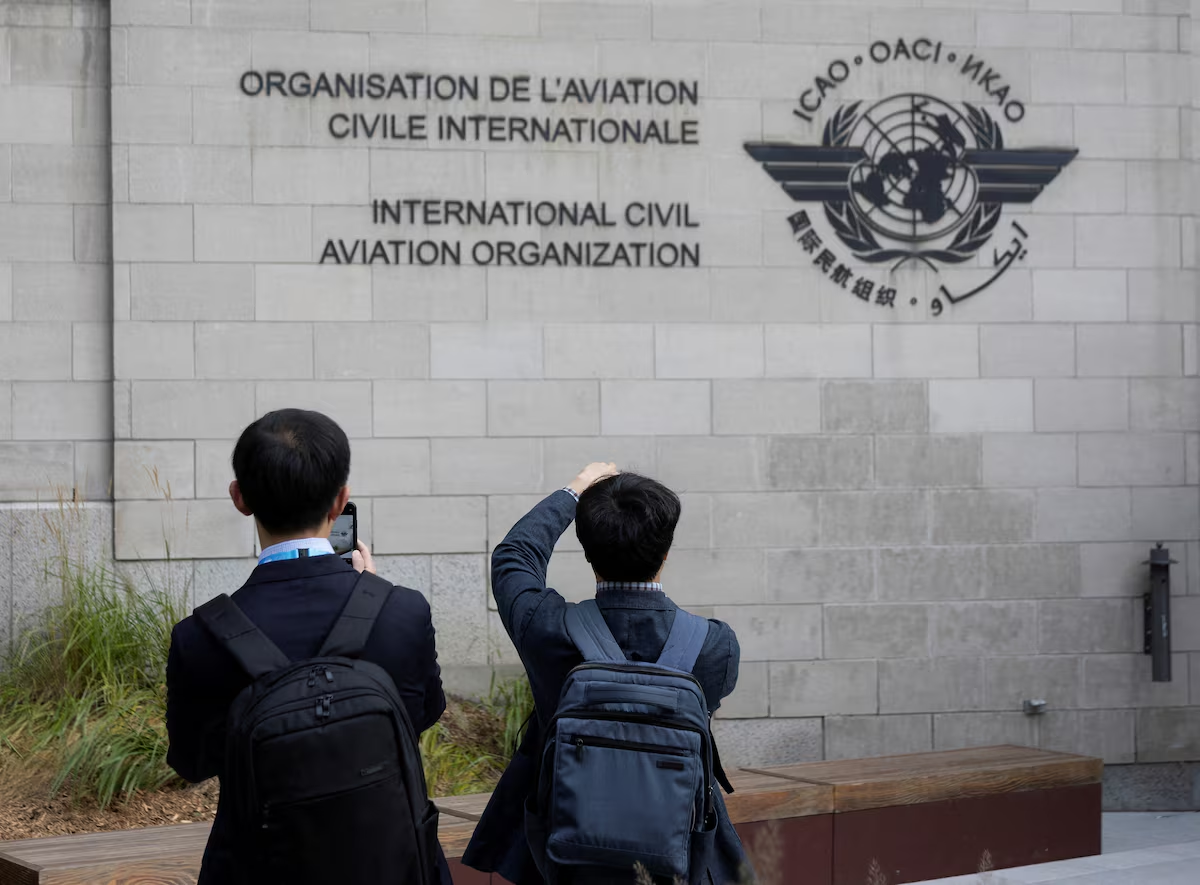
As of mid‑August 2025, the global aviation industry continues to adjust to evolving pilot workforce dynamics, characterized by persistent long-term demand, regulatory shifts, and mounting safety concerns.Stable Demand, But Hiring NormalizesA surge in post-pandemic pilot hiring that defined 2022 and 2023 has begun to moderate. Major U.S. carriers recruited 2,190 pilots during the first half of 2025—a significant slowdown from peak periods, yet still reflective of steady industry hiring activity. This transition to more “normalized” demand isn’t indicative of decline; rather, it aligns with levels seen prior to the pandemic. Meanwhile, industry forecasts continue to highlight robust long-term hiring needs: Boeing anticipates a global requirement for up to 674,000 new pilots over the next two decades, with 123,000 expected in North America alone. Similarly, Oliver Wyman estimates a pilot shortfall reaching 24,000 by 2026. According to the U.S. Bureau of Labor Statistics, aspiring pilots can expect about 18,500 openings annually through the next decade, tied to retirements and occupational turnover. Regulatory Shifts and ControversiesRecent regulatory developments signal mixed sentiment and controversy:India’s Poaching DebateThe Airline Pilots’ Association of India (ALPA India) strongly objected to the Indian government’s push at ICAO for a global code of conduct aimed at preventing the “poaching” of its pilots. The union framed the proposal as akin to “bonded labour” and called instead for domestic improvements in job conditions, pay transparency, and career paths. India Expands Pilot Age LimitsIn a move timed with its Vistara merger, Air India raised its pilot retirement age from 58 to 65. The broader employee retirement age increased to 60, to better retain experienced crews and meet expanding operational demands. Training Standards Under ScrutinyIndia’s aviation regulator, DGCA, issued a show‑cause notice to IndiGo after discovering that around 1,700 pilots had trained on unapproved simulators for challenging destinations like Leh, Calicut, and Kathmandu—a decision raising serious safety compliance concerns. Critical Concern: Safety Under PressureThe interplay of pilot shortages, aging air traffic control infrastructure, and rising travel volumes have manifested in alarming consequences. A recent spate of aviation deaths in the U.S. ended a 15-year safety streak, with industry experts citing staffing gaps and overburdened systems as potential contributors. Simultaneously, educational institutions are stepping in to help bridge the training gap. In Australia, the University of New South Wales added six Diamond DA40 XLT aircraft to its fleet to boost pilot training capacity, amid regional forecasts calling for 11,000 new pilots by 2043. Summary OutlookThe pilot employment landscape in 2025 presents a complex picture: while hiring momentum has moderated, demand remains structurally robust for the foreseeable future. Simultaneously, policy shifts—both protective and facilitative—are reshaping employment models across jurisdictions. Safety remains a paramount concern, with regulatory attention intensifying on training rigor and workforce resiliency.






Deja una respuesta